Contesting Nietzsche by Christa Davis Acampora
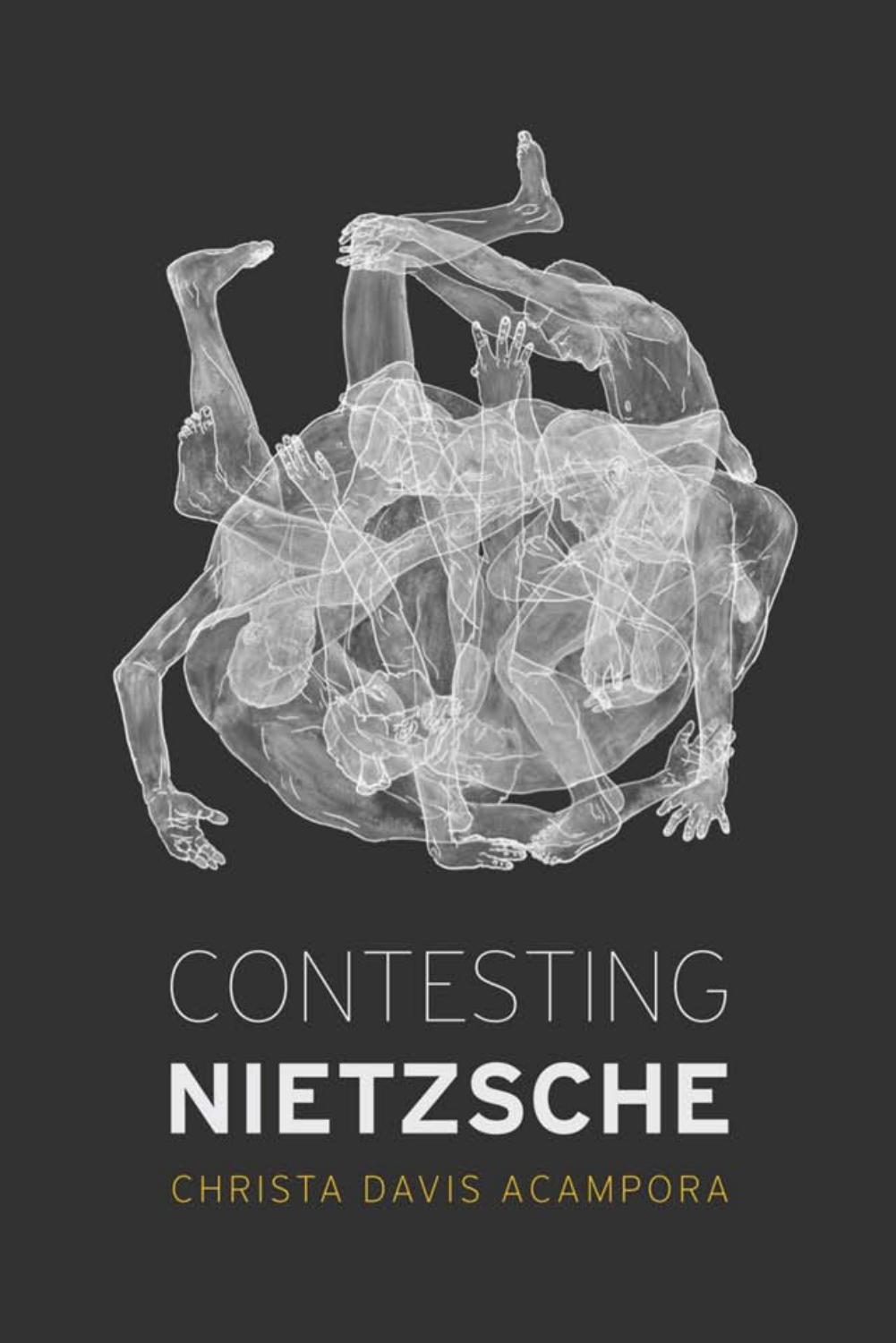
Author:Christa Davis Acampora [Acampora, Christa Davis]
Language: eng
Format: epub, pdf
Publisher: The University of Chicago Press
Published: 2013-11-17T05:00:00+00:00
4 .5 THE (MORAL) SUBJECT NATURALIZED
In the second essay of the Genealogy, Nietzsche links development of the narrower sense of morality with what he calls mnemotechnics—practices of memory that eventually produce a responsible subject. The subject reconceived as a plurality of struggling forces, as discussed in the preceding chapter, obviously raises some problems for the conception of the subject as the single and ultimate cause of action. Nietzsche thinks a more realistic, naturalistic conception is possible. What I discuss in this section will be just part of his unfolding story since what needs further explanation is how such organizations of forces come to be what they are and whether they can change (matters not fully addressed until chapter 5 below). Nietzsche’s agonism sheds light on both these concerns. In the next section, I consider how this further naturalization of the subject bears on his repeated claim and echo of Goethe in the Genealogy, “das Thun ist Alles”—the deed is everything. These combined features of his thought raise serious doubts as to whether the morality of intention is particularly instructive about the value of human activity since the conception of autonomous agency with which he wrestles appears to be incompatible with what both psychology and physiology suggest is the case about human consciousness and action. But this does not mean there is no room for a conception of agency in Nietzsche, that we must regard him as a determinist, or that his view leaves no room for the possibility of an ethos.22
The second essay of Nietzsche’s Genealogy depicts the development of the human psyche in terms of a contest of forces. The opening sections focus squarely on the problem of how the power (Kraft) of remembering accomplished its victory, resulting in an animal capable of making (and accounting for) promises, and suggest some deleterious effects that accrue with the atrophy of forgetting in the course of human development. The upshot of this part of Nietzsche’s story seems to be that the acquisition of the kind of willing that comes with promise-making had a price, the diminution of forgetting, and its withering was a detriment at the same time that it extended new possibilities for significant human activity. This idea is reinforced by Nietzsche’s insistence that forgetting is not merely an absence or failure of memory but rather something that is positively active in its own right. Nietzsche couches the matter in organic, biological terms of nutrition and digestion: “it [forgetting] is [. . .] responsible for the fact that what we experience and absorb enters our consciousness as little while we are digesting it (one might call the process ‘inpsychation’ [‘Einverseelung’])—as does the thousandfold process, involved in physical nourishment—so-called ‘incorporation’ [‘Einverleibung’]” (GM II:1). Were it not for forgetting, he suggests, we would not have a soul, a psyche, much as we would not have a body, a corpus, if we were not able to digest.23 The theme of forgetting as an active force and Nietzsche’s use of metaphors for digestion have not gone unnoticed.
Download
Contesting Nietzsche by Christa Davis Acampora.pdf
This site does not store any files on its server. We only index and link to content provided by other sites. Please contact the content providers to delete copyright contents if any and email us, we'll remove relevant links or contents immediately.
| Anthropology | Archaeology |
| Philosophy | Politics & Government |
| Social Sciences | Sociology |
| Women's Studies |
The remains of the day by Kazuo Ishiguro(9000)
Tools of Titans by Timothy Ferriss(8396)
Giovanni's Room by James Baldwin(7346)
The Black Swan by Nassim Nicholas Taleb(7130)
Inner Engineering: A Yogi's Guide to Joy by Sadhguru(6796)
The Way of Zen by Alan W. Watts(6614)
The Power of Now: A Guide to Spiritual Enlightenment by Eckhart Tolle(5784)
Asking the Right Questions: A Guide to Critical Thinking by M. Neil Browne & Stuart M. Keeley(5775)
The Six Wives Of Henry VIII (WOMEN IN HISTORY) by Fraser Antonia(5515)
Astrophysics for People in a Hurry by Neil DeGrasse Tyson(5190)
Housekeeping by Marilynne Robinson(4449)
12 Rules for Life by Jordan B. Peterson(4305)
Ikigai by Héctor García & Francesc Miralles(4275)
Double Down (Diary of a Wimpy Kid Book 11) by Jeff Kinney(4273)
The Ethical Slut by Janet W. Hardy(4253)
Skin in the Game by Nassim Nicholas Taleb(4250)
The Art of Happiness by The Dalai Lama(4130)
Skin in the Game: Hidden Asymmetries in Daily Life by Nassim Nicholas Taleb(4007)
Walking by Henry David Thoreau(3962)
